

Health Benefits
Rhubarb is naturally low in calories while providing fiber and a variety of plant compounds. Its refreshing tartness means it often needs far less added sugar than many other desserts, allowing the fruit itself to become the main source of flavor.
Adding chopped nuts contributes healthy unsaturated fats, fiber and minerals while making the crumble more satisfying. Instead of relying only on flour, butter and sugar, the nuts increase nutritional value and create a richer texture.
Compared with many traditional cakes, a fruit crumble usually contains a much higher fruit-to-dough ratio. That means more plant diversity, more natural flavors and a dessert that keeps whole ingredients at the center.
Plant count: 4 🌱


A Closer Look at Key Ingredients
- Rich in fiber that supports digestive health
- Provides vitamin K for normal bone health
- Contains polyphenols with antioxidant properties
- Naturally low in calories while providing plenty of flavor
- Rich in healthy unsaturated fats
- Provide fiber that supports satiety
- Contain vitamin E and magnesium
- Add plant protein and valuable minerals
- Provides vitamin C
- Enhances the natural flavor of rhubarb
- Helps balance the tartness of the fruit
- Adds freshness without extra sugar
- Contains antioxidant plant compounds
- May help support healthy blood sugar regulation
- Adds warmth and natural sweetness
- Brings extra flavor without additional sugar
Seasonal food often tastes best because nature decides the timing.
Anonymous
Pro Tips
- Taste the rhubarb before adding all the sugar, as sweeter stalks often need much less.
- Chill the crumble topping for about 30 minutes before baking for crispier crumbs.
- Leave the crumble mixture slightly chunky rather than rubbing it completely smooth.
- Try mixing different nuts for more flavor and plant diversity.
- Serve warm with plain yogurt, kefir or skyr for a delicious contrast.

Did You Know?
Rhubarb is technically a vegetable, even though it is most often prepared like a fruit in desserts. Its bright red stalks are edible, while the leaves naturally contain very high amounts of oxalic acid and should never be eaten. Rhubarb also provides vitamin K and a variety of polyphenols that contribute to its nutritional profile.
One reason rhubarb works so well in healthier desserts is its naturally tart flavor. Unlike many sweet fruits, it does not rely on high natural sugar levels to taste good. That means recipes can often use considerably less added sugar while still delivering plenty of flavor. Pairing fruit with nuts also increases fiber and healthy fats, helping create a more satisfying dessert.
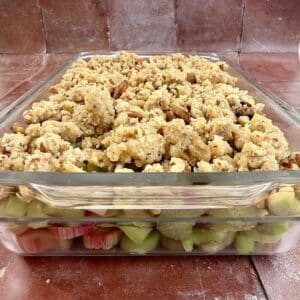
Rhubarb Crumble with Nuts
Ingredients
Rhubarb Filling
- 700 g rhubarb cut into 2–3 cm pieces
- 40 –60 g sugar adjust to taste depending on the rhubarb
- 1 tbsp lemon juice
- 1 tsp vanilla extract or natural vanilla
- ½ tsp cinnamon optional
- 1 tsp corn starch optional, if the rhubarb is very juicy
Crumble Topping
- 180 g flour wheat or spelt
- 100 g cold butter diced
- 40 –50 g sugar
- 80 g chopped hazelnuts or mixed nuts
- 1 pinch salt
- ½ tsp cinnamon optional
Instructions
- Preheat the oven to 180°C (fan 160°C).
- Mix the rhubarb with the sugar, lemon juice, vanilla and cinnamon. If the rhubarb is especially juicy, stir in the corn starch. Transfer to a baking dish.
- In a separate bowl, combine the flour, butter, sugar, chopped nuts, salt and cinnamon. Rub everything together with your fingertips until coarse crumbs form.
- Sprinkle the crumble evenly over the rhubarb without pressing it down.
- Bake for 30–35 minutes, until the topping is golden brown and the fruit is bubbling around the edges.
- Let cool for about 10 minutes before serving. Enjoy warm on its own or with yogurt, kefir, skyr or a little vanilla yogurt.