

Start Your Healthy Day
Pick one gut-friendly staple to bring into your kitchen this week.
- add oats or overnight oats to breakfast
- cook a batch of lentils or beans for the week
- keep yogurt or kefir in the fridge
- make extra potatoes, rice, or grains and use some cold later
- buy one whole grain you do not use often, like barley
- add one seed or nut you can use often, like chia, flax, walnuts, or cashews
One simple staple is enough to start with.
1. Oats
Oats are a very useful food to eat more often if you want to support your gut. They bring fiber, including beta-glucan, and they can also contain some resistant starch, especially in forms like overnight oats or cooked-and-cooled porridge. Resistant starch can be fermented by gut microbes into helpful compounds such as butyrate.
That makes oats a simple and practical way to support the gut microbiome while also helping meals feel more steady and satisfying.
2. Beans and lentils
Beans and lentils deserve a permanent place in a gut-friendly kitchen. They bring fiber, plant protein, and resistant starch, and they help feed the gut microbiome in a way that supports short-chain fatty acid production.
They are also very practical. You can use canned beans, jarred beans, or cooked lentils in soups, stews, salads, bowls, wraps, or tomato sauces. If you are using canned beans, rinsing them can freshen them up and may help some people tolerate them better.
Beans and lentils matter enough to deserve their own articles too: Why Beans Are One of the Best Gut-Friendly Foods and Why Lentils Are One of the Most Underrated Gut-Friendly Foods both take that further.
3. Cooked-and-cooled carbs
Cooked-and-cooled carbs are a useful practical tip to know because cooling changes part of the starch into a form that is more resistant to digestion. That means less of it is broken down in the small intestine and more of it can reach the colon, where gut microbes can ferment it. Potatoes and rice are the best-known examples, but the same idea can apply to other starchy foods too. This may also help support steadier blood sugar responses compared with the same food eaten freshly cooked.
In practice, that might mean potato salad, cold rice in a lunch bowl, cooked grains used the next day, or reheated pasta. It is a simple reminder that leftovers are not always less interesting nutritionally — sometimes they can be a little more useful for the gut.

4. Barley and other whole grains
Barley is one of the most underrated grains for gut health. It brings fiber, including soluble fiber, and works well in soups, grain bowls, or as a simple side. Other whole grains such as rye, millet, buckwheat, and wholegrain rice can all be useful too, but barley deserves a special mention because it is hearty, versatile, and a very easy grain to build into simple everyday meals.
Whole grains can help support the microbiome by bringing fermentable carbohydrates that beneficial microbes can use. They do not need to replace every refined grain at once, but they are worth bringing in a little more often.
5. Greenish bananas
Bananas can be helpful, but the stage of ripeness matters. Less ripe or slightly green bananas contain more resistant starch than very ripe ones, while riper bananas contain more sugar and less of that resistant starch. That is one reason greener bananas are often mentioned in gut-health conversations and may also support steadier blood sugar responses a little better.
That said, tolerance varies. Some people do well with them, and others do not. So this is not a must-have food. It is simply one more option worth knowing if you want a practical resistant starch food that is easy to keep around.

6. Onions, garlic, and leeks
Onions, garlic, and leeks are some of the most useful foods to keep around because they are easy to cook with and fit into so many everyday meals. They are also classic sources of inulin-type fibers, which makes them a simple and practical part of a gut-friendly kitchen.
A lot of gut-friendly eating starts with ingredients like these. They add flavour, make meals better, and quietly help feed the microbes already there.
7. Prebiotic vegetables worth knowing
These are some of the less familiar gut-friendly vegetables worth knowing. They tend to be richer in inulin-type fibers and can be a useful way to bring more variety into your meals beyond the usual basics. Chicory, endive, artichokes, asparagus, Jerusalem artichokes, and salsify all fit well here.
You do not need all of them, and you do not need them all the time. But knowing a few of them can help if you want to make your gut-friendly kitchen a little more varied and less reliant on the same ingredients again and again.

8. Cruciferous vegetables
This group deserves its own place. Broccoli, broccolini, cauliflower, Brussels sprouts, cabbage, kale, and similar vegetables bring fiber and a range of bioactive compounds that support a healthier gut environment and help maintain the intestinal barrier. Research on cruciferous vegetables and the gut microbiome suggests they can influence gut microbiome composition and function, even if the details are still being explored.
In practical terms, they are simply very useful vegetables to cook more often. They fit into traybakes, soups, stir-fries, warm salads, and side dishes, which makes them easy to repeat.
9. Yogurt and kefir
A gut-friendly kitchen does not need to be all about fiber. Yogurt and kefir can still be useful because they may contain live cultures and can be one of the easiest ways to bring fermented foods into everyday meals.
They are also very practical to keep around. Not every product fits the probiotic definition in the same way, but both can still have a useful place in a more supportive kitchen. Fermented Foods: Benefits, Limits, and How to Use Them goes deeper into what they can do, where they may be useful, and what is worth knowing about them.
10. Fermented vegetables
Fermented vegetables can be a useful extra in a gut-friendly kitchen because they add variety and may bring live microbes when they are not heavily processed or pasteurised after fermentation. They are also one of the easiest ways to bring something fermented into everyday meals.
Small amounts are often enough here. A little sauerkraut or kimchi beside your main dish, grain bowl, or lunch plate can already be a very realistic way to use them.
11. Sourdough bread
Proper sourdough is a very good bread to keep around, especially when it is made from rye or more wholegrain flours. The long fermentation improves flavour, texture, and digestibility, which is one reason many people find it easier to digest than standard fast-made bread.
It is a strong everyday option when it is properly made and eaten as part of a more balanced meal.

12. Olive oil, nuts, and seeds
A gut-friendly kitchen is not only about fiber and fermentation. Olive oil, nuts, and seeds help round out meals and make supportive eating easier to keep. They bring healthy fats, help meals feel more complete, and fit naturally into the Mediterranean-style pattern that is often linked with a more favorable microbiome and broader metabolic health.
They also make everyday food taste better, which matters more than people sometimes think. A salad with olive oil, yogurt with seeds, or oats with walnuts or cashews is not only more nourishing and better balanced for blood sugar. It is also more satisfying and easier to enjoy again tomorrow.
Go more in depth
If you want to take this a little further, The Real-Life Guide to Gut-Friendly Eating gives the bigger picture of what gut-friendly eating looks like overall, while 10 Simple Ways to Make Your Meals More Gut Friendly turns that into small, practical meal upgrades.
If you want to focus more on the fiber side of things, How to Eat More Fiber Without Overthinking It goes deeper into simple ways to bring more of it into everyday meals without making things feel complicated.
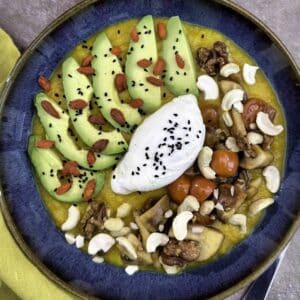
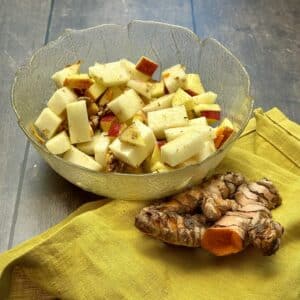
Gut-friendly recipes to try

The bottom line
A gut-friendly kitchen is usually built from simple things: oats, legumes, whole grains, prebiotic vegetables, fermented foods, olive oil, nuts, seeds, and a few resistant starch foods like cooked-and-cooled carbs. These foods help make supportive eating more practical, more affordable, and easier to repeat.
The point is not to keep every “superfood” in the cupboard. It is to keep a few reliable foods around that help your meals become a little more gut-friendly without much extra effort.